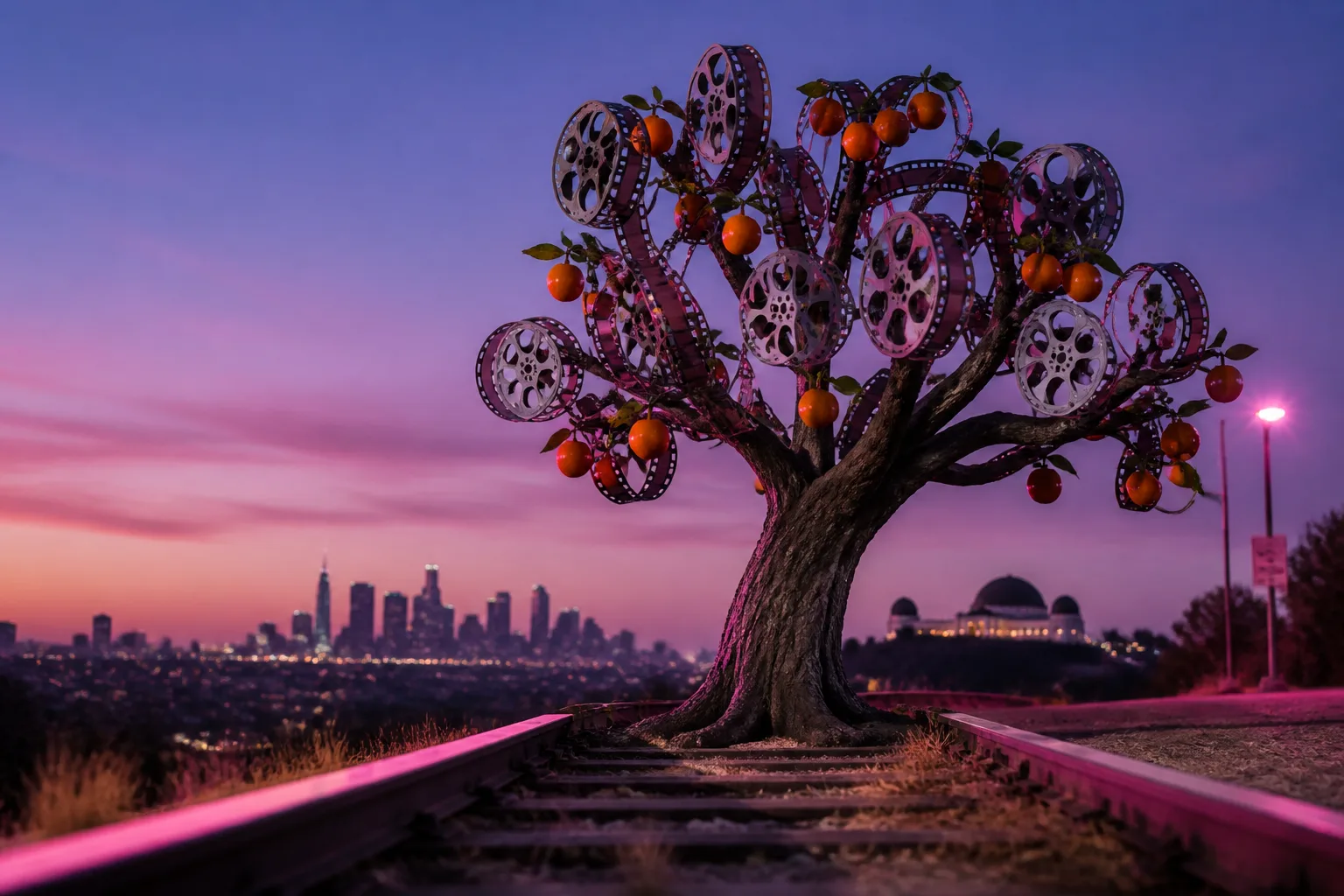
Los Angeles Hidden Cultural Layers: From Fruit Trees to Film History and Historic Railways
When you picture Los Angeles, the first images that pop up are studio backlots, palm‑lined boulevards, and the glittering skyline. A new 2026 documentary series, narrated by filmmaker Nathan, challenges that narrow view by peeling back the city’s layers and revealing a mosaic of orchards, vanished beach towns, iron rail loops, and a botanical palette that has shaped Hollywood’s biggest genres.
The episode opens with sweeping shots of orange groves and avocado orchards that once blanketed the basin. California’s first orange trees—a hybrid of pomelo and mandarin—were planted in the late 1800s and quickly became a staple of the region’s agriculture. The Hass avocado, named after mail carrier Rudolph Hass, now accounts for more than 95 % of the state’s production. Apples and persimmons also found a niche: apple orchards were introduced by European settlers, while the Chinese‑Japanese kaki persimmon has grown in California since the early 20th century. The film notes how these fruit trees altered the landscape and left a lasting imprint on the city’s culinary and cultural identity.
Next, the series turns to Surfridge, a former beach community that once sat just west of Los Angeles International Airport. Developed in 1921 by the Dickinson & Gillespie Company, Surfridge was part of the larger Playa del Rey district and attracted Hollywood elites such as Cecil B. DeMille and Charles Bickford. By the 1960s, the City of Los Angeles used eminent domain to acquire the neighborhood for airport expansion, and the last homes were demolished by 1970. Today the area is a ghost town, its empty streets a stark reminder of the city’s rapid growth.
The documentary then shifts focus to the Tehachapi Loop, a 3,779‑foot spiral on the Union Pacific Railroad’s Mojave Subdivision. Built in 1876 by the Southern Pacific Railroad, the loop connects Bakersfield to the Mojave Desert and is one of the most photographed railways in the United States. With a 1,210‑foot diameter, the loop allows freight trains to gain 77 feet of elevation while passing over themselves. The film cites the loop’s designation as a National Historic Civil Engineering Landmark in 1998.
A short segment highlights the largest collection of Thomas Guides in the United States, housed in a Los Angeles museum. Thomas Guides are detailed, hand‑drawn maps of railroad routes that were essential to early 20th‑century rail operations, offering insight into the logistical backbone that supported the city’s industrial and film‑industry growth.
The episode also explores the botanical diversity that colors Southern California. Wildflowers such as desert marigold and California poppy bloom across the basin, while jacaranda trees—introduced in the early 1900s—line streets in West Hollywood. The film notes that these plants have become part of the city’s visual identity and are frequently featured in film and television productions.
In a cultural history segment, the series explains how Los Angeles helped shape the true‑crime and science‑fiction genres. Early film studios—Universal, Paramount, and Warner Bros.—produced pioneering crime dramas that set the template for the genre. Meanwhile, the city’s fascination with futurism and its proximity to the aerospace industry inspired early science‑fiction films such as “The Day the Earth Stood Still” (1951) and “Blade Runner” (1982).
The documentary also traces the roots of auto racing in Los Angeles. Dry lake beds in the Mojave Desert and the backlot of the old Hollywood studio lot served as early racetracks for both stock cars and the first Hollywood stunt drivers. The city’s association with speed and spectacle has persisted in modern motorsports events such as the Los Angeles International Raceway.
The series revisits the 1928 St. Francis Dam collapse, which released a catastrophic flood that devastated the Los Angeles basin. The dam, located on the Santa Clara River, failed on March 12, 1928, killing more than 400 people and causing widespread damage. The event prompted reforms in dam safety regulations nationwide.
Finally, the film debunks the myth that tiki culture is a Polynesian import. According to the documentary, tiki décor and themed restaurants were invented by Hollywood producers in the 1930s to capitalize on exoticism, and the style has since become a distinct Hollywood aesthetic.
By weaving together agriculture, urban development, transportation, botany, and genre film history, the documentary underscores how diverse elements have converged to create the unique cultural tapestry of Los Angeles.